
The Dancer's Path in America
Many talented dancers move from Russia to other countries to develop their dance careers. Today we will talk with Evgenia Casanave - winner of the silver medal at the Russian Championship in 10 dances, vice-champion of the World Cup in the same program, winner of the European Championship among “Professionals” about dance sports in the USA and how she found herself in one of the most popular dance styles today - American Smooth.
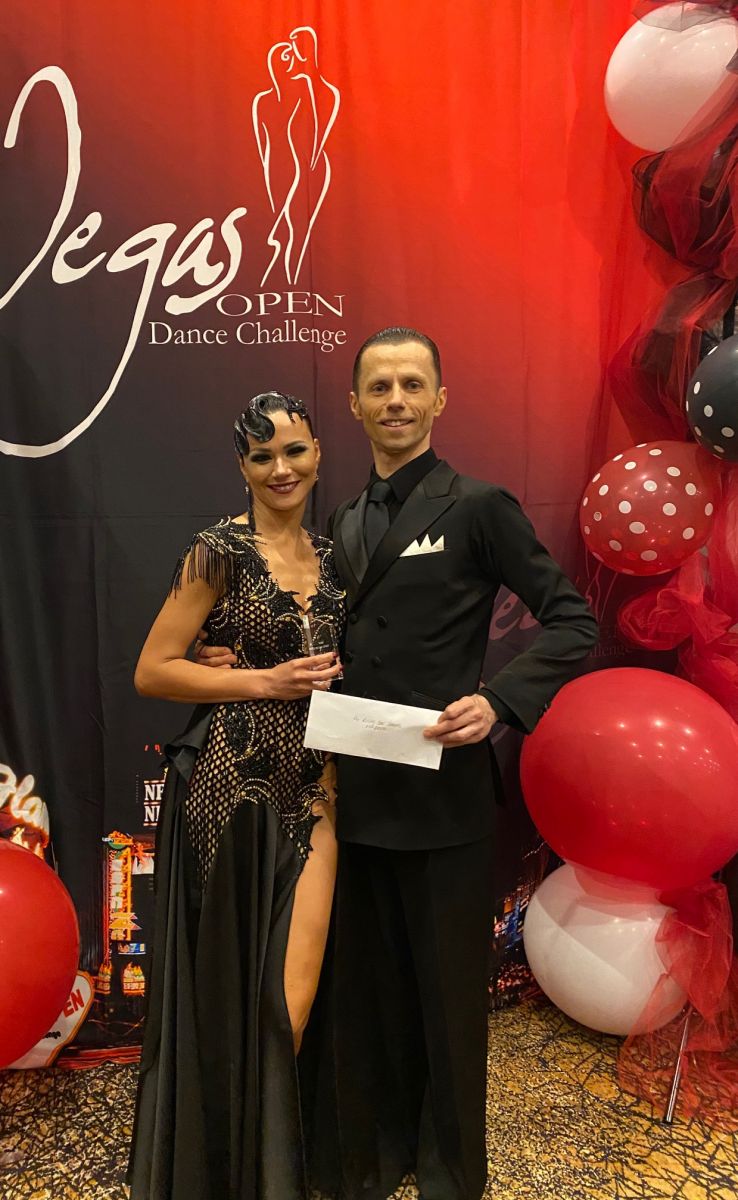
- When you moved to America, you probably noticed the difference between the American dance system and the Russian one. Knowing both systems from the inside, having successfully performed in competitions both in these countries and around the world, tell me, what are the main differences between the dance worlds of America and Russia from each other?
- The biggest difference is that sports in America create mainly a professional division. There are amateur couples, but the majority of dancers perform in the “Professional” category. There are only a lot of amateurs at the national championship, when they all gather, and at most tournaments the program is built around professional duets. In Russia, on the contrary, there are a lot of “amateurs”, but there are noticeably fewer “professionals”. Another fact is that most duets perform in several categories at once: we, for example, dance International Standard, International Latin, American Smooth and American Rhythm, plus some couples also take to the floor in the “theatrical show” category. In addition, in Russia the most prestigious competitions are always held in Moscow, and in order to dance in many tournaments, you don’t have to travel a lot, but in America all the major competitions are “scattered” across the states, and you have to fly a lot within the country.
- How did it happen that after such a successful career in “classical” dance sports and in shows, you decided to try American Smooth?
- It all started with my last partner in Russia - with Oleg Kharlamov. It was with him that the idea of starting to dance in this style arose. Oleg previously worked in America and danced smooth with students, and later told me about this direction. We performed very successfully in the top ten, were in the finals of the World Championship and European Championship and always thought that it would be nice to start dancing smooth. This was about five years ago, and at that time American Smooth was only developed in America. We watched a lot of videos of American couples, analyzed them... The dance of professional couples in this direction is a fascinating sight. We thought how we could start, because we are ten-year-olds, and smus is a direction that includes both programs (European and Latin American), complemented by modern choreography and other dance styles. We thought we would do well, plus we did a lot of show dancing, which could also help us develop in American Smooth. For our couple, the show then was an expression of individuality, of our emotions, because we could do whatever we wanted on the floor. Therefore, our numbers were not classic, we tried to bring something new to the European program, something playful, different from the standard, but with the same steps. As I already said, the direction was developed only in America, in Russia at that time only ProAm couples danced it, there were no professionals at all. There were no teachers with whom we could consult on what patterns or choreography to put on... Unfortunately, Oleg and I never started dancing American Smooth, but, having separated, we started dancing it in different countries: I am in America, and Oleg is in Russia. By that time, Eldar Dzhafarov, together with Olga Krasnyanskaya, had organized a new federation for American Smooth and American Rhythm and are now actively developing it, so professional smooth duets are now appearing in Russia, teachers have begun to come. When I came to America, I initially planned to dance the European program, I thought that I would develop in this direction, but after the first American Smooth tournament I saw live, I decided that I was ready to dance this particular style. I found a partner who had been developing in this direction for a long time, he agreed to partner with me, for which I am very grateful to him, because I had no experience, despite a strong base in the European and Latin American programs.
- Evgeniya, during your dancing career you have participated in so many tournaments that the feeling of excitement before competitions is a thing of the past, however, at the first American Smooth tournament you were probably still nervous. Tell us about your feelings and emotions at your first competitions.
- With my first partner, we danced several tournaments. My impressions after the first one were quite interesting: firstly, we danced the semi-finals in one go, and for me, as a lover of the European program, who was used to standing in a frame all the time, feeling my partner throughout the dance and only breaking up to bow, it was a shock to see the number of arms and legs flying around me (laughs). The floor was quite small at that tournament, there were a lot of couples, my partner and I danced in an open position quite far from each other... In general, it was a very interesting experience. It seemed to me then that everyone was moving in completely different directions, because there are no such clear canons as in the standard, while you stand in the shape alone, and even on one leg, and then you still need to do support, move, interact with a partner who stands quite far away, not even like in Latin. In the Latin American dance program, the dancers stand upright and, even when the partners are separated, they can easily control the location of the dancing half, and the couples around them move quite predictably. In American Smooth, the movement of the park competitors seemed chaotic to me. Now, with the passage of time, I can already understand who is going where, when and why, but the first tournament for me was full of surprises from all sides. Despite the excitement - the first tournament in a new style for me could not help but evoke strong emotions - we performed very well, and after these competitions I realized that I need to work a lot in this style. First of all, in order to be satisfied with myself, to show exactly what I want, not to be afraid of other couples, to be more open.
- How did your career at American Smooth develop further?
- Unfortunately, we didn’t work out as a couple with our first partner, we danced for less than a year, and I had to move - from the east coast to the west - where I found a very good partner with whom I continued to study this style. With my current partner, we showed good results already at the first tournament. We fit together very well in terms of energy – I felt calm for the first time at the first tournament thanks to him. I have never been so confident and focused on my first performance in my life. We didn't have any expectations, we just went out and danced as best we could, danced for our own pleasure. As a result, we won this tournament... It was Rising Star, there were quite a lot of couples, we started with ¼, and we won, not expecting it at all. The next day we took part in an open tournament and made it to the finals, finishing fifth among very strong pairs. Now, unfortunately, it is not possible to dance at competitions due to the pandemic situation, but when tournaments resume, we will continue our successful performances. Despite the fact that I started performing successfully in American Smooth, I continue to perform in dancesport competitions. My career as a “professional” continues to go up, and although I already have many significant victories under my belt, I plan to continue this “winning streak” both in the International Standard and International Latin categories, as well as in the American Smooth category. Surely on your dance path you have met many American Smooth teachers.
- Who are your main mentors?
- The first teachers were Marianne Nicole De Palma and Dustin Rufus - I am very grateful to these two people for introducing me into this wonderful world of American Smooth, believing in me, helping not only from a professional point of view, but also from a moral point of view. I would also like to mention Olga Faraponova and Alexandra Perzu - they gave me a sense of freedom, of what I can bring to smooth as a ten-man dancer, what I can do based on my knowledge base, to feel how spacious and freely I can move. After all, I am a world champion in professional solo dancing and a finalist of the World Championship - this experience needed to be “applied” to American Smooth, with which Olga and Alexandra helped me. And I am very grateful to Toni Redpath, with whom we are working now. She takes a very disciplined approach to American Smooth, promotes this style, streamlines the movements. After her classes, I had a clear system in my head about what positions are in American Smooth, in which elements what should be the distance between partners, what figures are included in American Smooth, while she creates a Global Smooth system, gives names to movements, as they did many years ago in the European and Latin American programs. So that dancers from all over the world understand that if this is an “open promenade”, then this is it, and not some other element with a name that only Americans understand. I think this will be a big breakthrough because it will give dancers from all over the world the opportunity to learn the figures and understand the difference between these elements in the European/Latin American program and the same figures in American Smooth.
- What is your favorite dance?
- Tango has always been my favorite standard dance - expressive, emotional, passionate. I could be more active as a partner than in other dances on the European program. In Latin, I liked rumba more - soft, gentle, romantic. What’s most interesting is that in American Smooth I like to watch the Viennese waltz the most, and I like to dance the foxtrot, because it feels completely different than in the European program - it’s very playful in the smooth, it gives the dance new colors.
- What advice would you give to a dancer who is thinking about trying his hand at American Smooth?
- I would advise any dancer to try themselves in this style, because dancing different styles always helps to develop in your native one. Perhaps the dancers will then move to American Smooth, because the feeling of freedom that this direction gives is incomparable. There is a feeling of flight, there is an opportunity to express yourself in absolutely any movements. I advise you to try new things, find your own style. After learning the technical aspects of dance, you need to find yourself in this dance. In American Smooth, you can come up with your own movements, and they will be only yours, you don’t have to force yourself into rigid boundaries, for example, so that your foot looks only there and nowhere else, and your shape is only to the left... In American Smooth, everything is possible, and that’s very cool!